
Process
Swiss-Type vs Turn-Mill: Choosing the Right Process for Long Slender Shafts
A practical comparison of Swiss-type lathes and turn-mill centers for long, slender, tight-tolerance shafts — when each wins on roundness, taper, and cost.
In-house at our Dongguan facility, with dimensional inspection by optical measuring systems, height gauges and calipers.
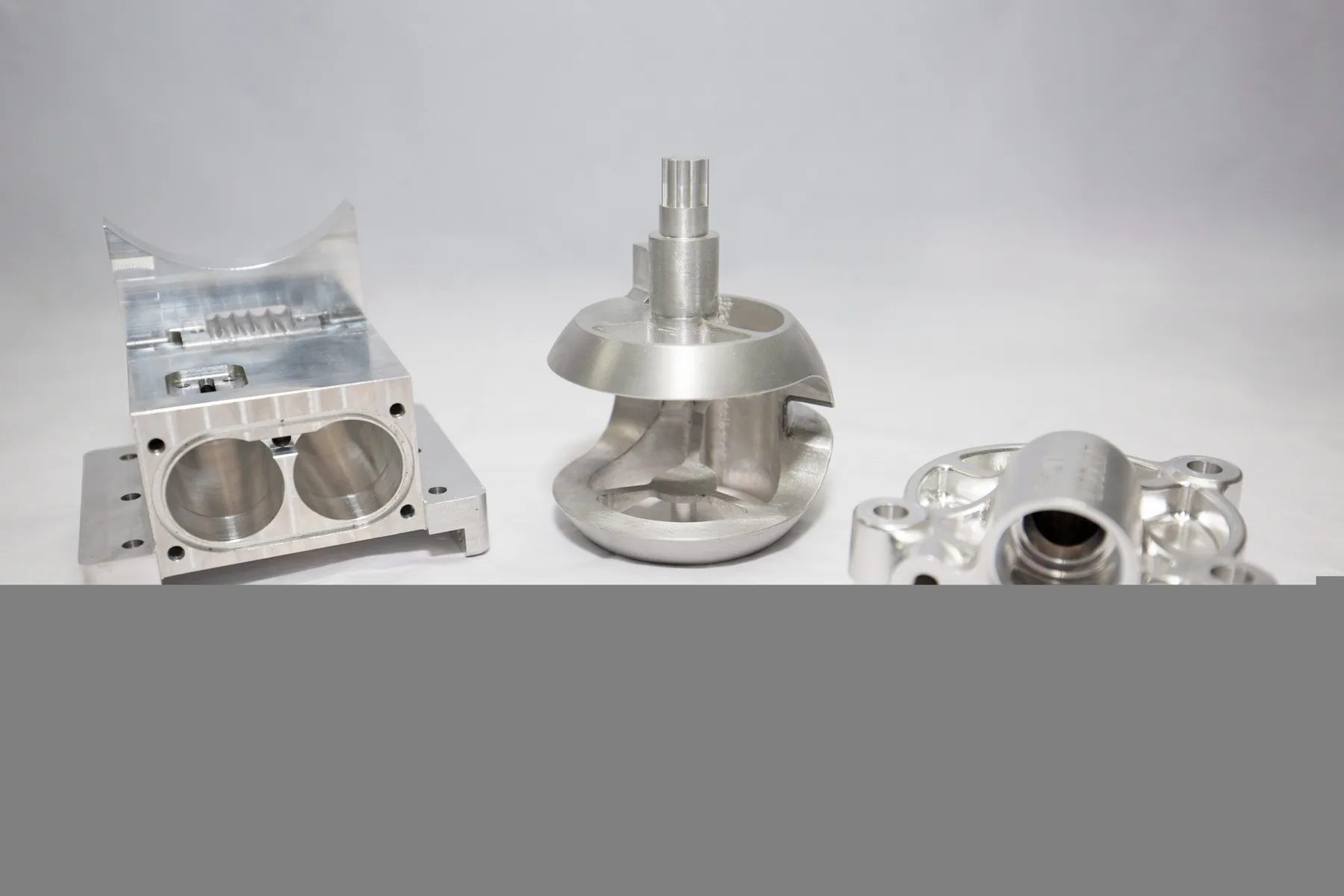
Turning looks simple until concentricity matters. We run CNC lathes up to Ø380 mm swing and Ø52 mm bar capacity, plus turn-mill centres for parts that need milled features without a second operation.
The turn-mill centres are the ones that change the economics. A flange that would normally need a lathe, then a mill, then a fixture and an extra handling step gets done in one clamping — which is both faster and more accurate, because concentricity is established by the machine rather than by how carefully an operator indicates the part in.
On parts where a bore has to run true to an outer diameter, single-setup machining is worth more than any amount of inspection. We hold tight concentricity as routine on servo flanges and similar parts, and document it on the inspection report.
| Machine Type | Capability | Notes |
|---|---|---|
| CNC Lathe (standard) | Up to Ø380 mm swing | Shafts, bushings, fittings |
| Turn-Mill Centre | Live tooling + sub-spindle | Milled features in one setup |
3-axis and 4-axis vertical machining centres for brackets, housings, plates and enclosures, from one-off prototypes to repeat batches.
Learn more5-axis machining centre (U400A) for complex, multi-face geometry in one setup. Angled features and compound surfaces finished in a single clamping.
Learn moreSwiss-type and sliding-head turning for long slender shafts, micro parts and high-volume turned components with sub-spindle and Y-axis work.
Learn moreA practical comparison of Swiss-type lathes and turn-mill centers for long, slender, tight-tolerance shafts — when each wins on roundness, taper, and cost.

Thread milling vs tapping: how hole depth, material, tool life, and chip control decide which internal threading method is cheaper, faster, and more reliable.
Machining 316L stainless steel is hard on tools. Here are the speeds, feeds, coolant, and tooling choices that control work hardening and hold tight tolerances.
Send your drawings and requirements. Quote, lead time and DFM feedback by email.